KI und Stammdatenqualität

KI und Stammdatenqualität

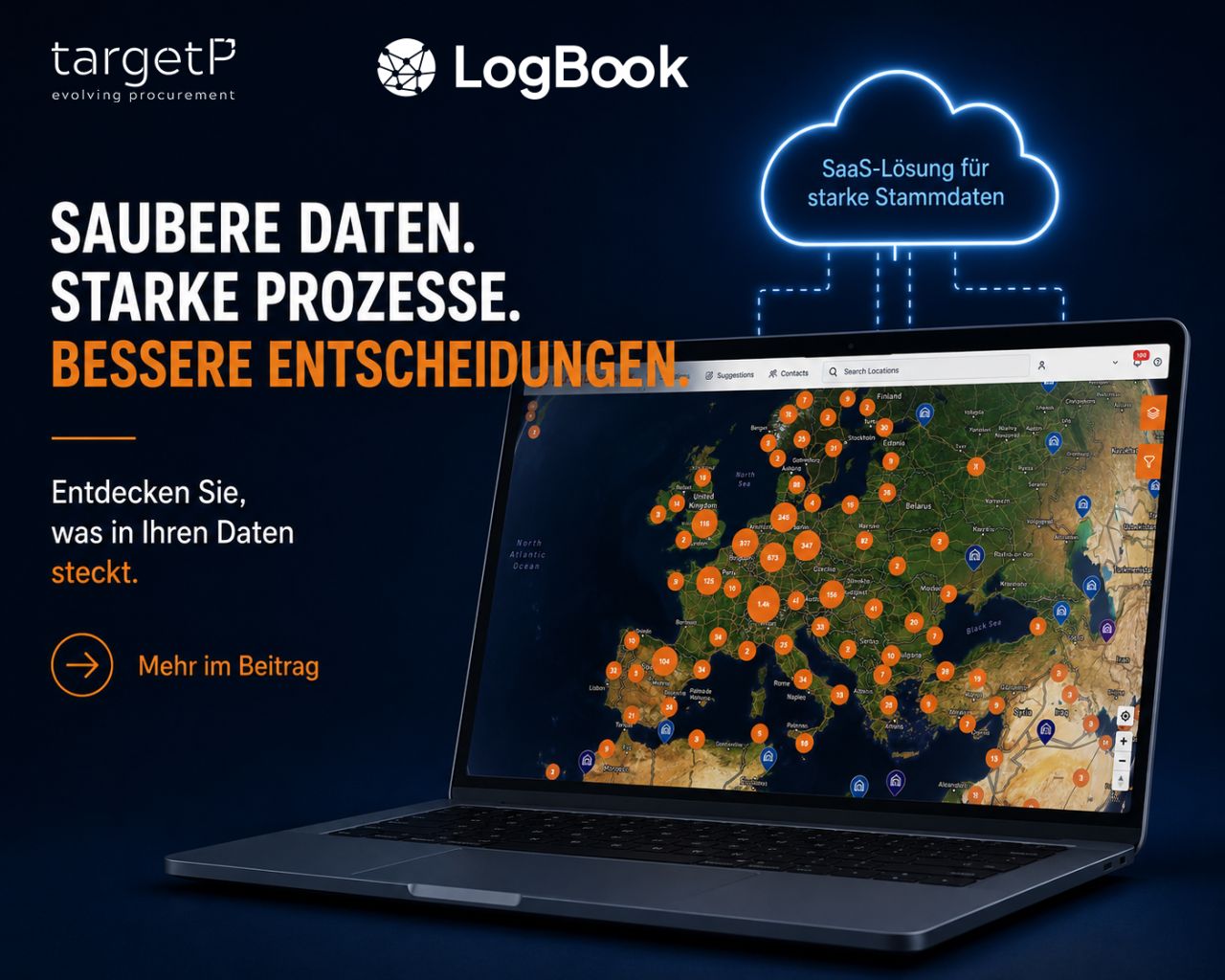
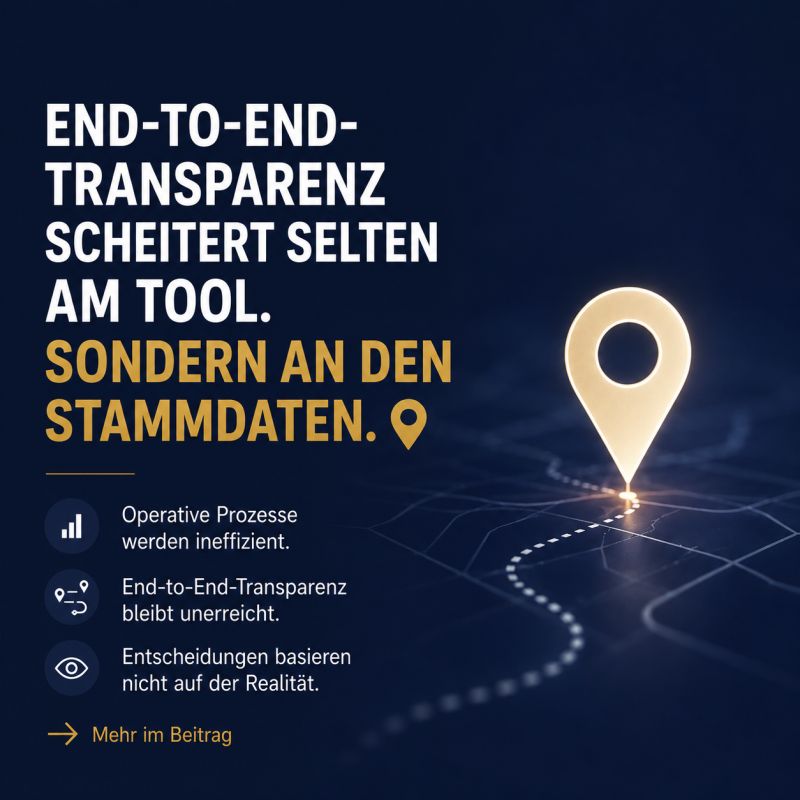
🚀 Teil 4 unserer Serie: KI und Stammdatenqualität KI und Stammdatenqualität: Alle sprechen über End-to-End-Transparenz. Aber kaum jemand hat sie wirklich. Der Grund? Systeme sind nur so transparent wie die dahinterliegenden Stammdaten. Vor allem Lieferanten- und Lokationsdaten. Wenn diese Daten nicht sauber gepflegt sind: ➡️ stimmen Reports nicht ➡️ werden Lieferwege falsch dargestellt ➡️ fehlt eine Sicht auf Lieferkettenrisiken ⚠️ Und genau hier beginnt das eigentliche Problem: Fehlende Transparenz kostet Zeit und Geld. Vor allem in (Supply Chain) Prozessen. Zum Beispiel durch: ⚡ Fehlfahrten und Fehlentscheidungen ⚡ operative „Reibung“, wie z.B. falsche Anlieferorte ⚡ manuelle Klärungen ⚡ falsche Prioritäten, z.B. bei Tourenplanung Das Entscheidende: Viele dieser vermeidbaren Kosten fallen täglich an. Und sie skalieren mit zunehmender Komplexität der Supply Chain. Bessere Datenqualität hat direkten Einfluss auf: ✅ Total Cost of Ownership ✅ Prozesskosten und operative Effizienz ✅ Entscheidungsqualität ✅ Risikovermeidung und Risikosteuerung Ohne neue Tools. Nur durch bessere Daten. End-to-End-Transparenz beginnt nicht im Dashboard, sondern in den Stammdaten. Stay tuned. Im nächsten Beitrag zeigen wir, warum viele vermeintliche ERP- und Prozessprobleme in Wahrheit keine Systemprobleme sind, sondern die Folge schlechter Stammdaten. Interessiert daran, wie man diese Datenqualität mit Unterstützung innovativer und bewährter digitaler Supply Chain Technologie in kurzer Zeit massiv verbessert? Dann dranbleiben.

Interim Management Meyer Werft

My Interim Management at Meyer Werft ended. After nine and a half months in Papenburg. Time to say goodbye and thank you. Interim CPO assignments are strange things. You arrive, you try to be useful, and then you leave. Whether you actually made a difference, that’s for others to judge, not you. When I joined Meyer Werft in Papenburg (Emsland is enemy territory for a “Grafschafter”;-) ) last September, the task was clear: developing the procurement organization, while simultaneously delivering on IDW S 6 obligations, is not something you do alone. This team did it, and they did it very well. They deepened collaboration across sites and group companies, aligning on shared categories and working through common challenges together, the kind of cross-site synergy work that doesn’t happen unless people actually trust each other enough to have honest conversations. What this team achieved and built in less than a year impresses me: ✅Meyer Werft’s all-new 2028 procurement strategy, shaped by the extended procurement leadership team ✅Exceeding the IDW S 6 requirements. And while that result matters, what matters more to me is how it happened: through work, conversations, and a procurement team that delivered every single week ✅A new organizational structure with clear roles, building new capabilities ✅A PMO lead & process that keeps strategic projects on track ✅A new category management team that also got the tools to do the job properly ✅ A new procurement academy that has already delivered hundreds of training hours ✅A new Procurement Cost Engineering capability and team All this on top of numerous other initiatives and large-scale sourcing projects for the upcoming cruise ships! You all can be proud! Thank you for letting me be a part of it. I’m grateful to Ralf Schmitz (CRO) and Bernd Eikens (CEO) for their trust. To Marcus Schüller, Maxim Przystaw, and the team: thank you for your outstanding support. And special thanks to Vera Lannek for the trustworthy collaboration across company boundaries. What moved me most had nothing to do with deliverables: The farewell from the procurement team, the words, the gifts, the warmth. I genuinely didn’t see that coming. And the messages afterwards, on WhatsApp, by email, here on LinkedIn, that caught me off guard, too, in the best possible way. It meant more to me than I can properly express. Thanks so much, MW Procurement Team! Good luck with everything ahead! I’ll be watching from a distance, rooting for you. 🚢

KI und Stammdatenqualität

KI und Stammdatenqualität

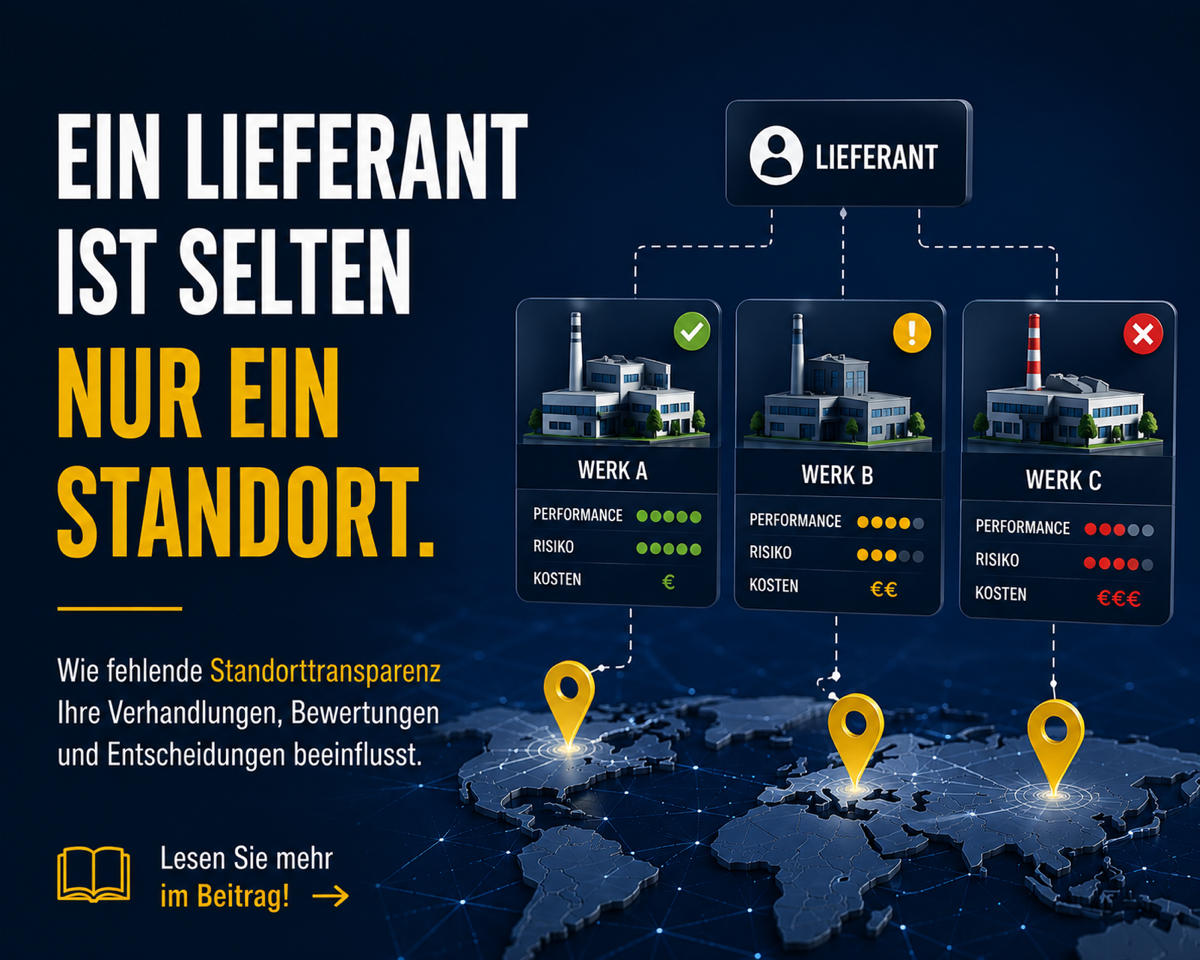
🚀 Teil 3 unserer Serie: KI und Stammdatenqualität Im Einkauf geht es um die Erreichung wichtiger Ziele: Kosten. Risiken. Performance. Wirksamkeit. Effizienz Ein Lieferant ist selten nur ein Produktionsstandort und das hat Einfluss auf Einkaufsentscheidungen, Kapazitätsplanung, Kostenstrukturen, Netzwerkplanung, Lieferantenmanagement. Und trotzdem basieren viele Entscheidungen noch auf aggregierten Lieferantenstrukturen. Unterschiedliche Lieferwerke bedeuten unterschiedliche: ⚡ Lieferwege und Logistikkonzepte ⚡ Risikoausprägungen und Risikopotentiale ⚡ Kostenstrukturen und Werthebel Wenn diese Standorte nicht sauber getrennt sind: ⚡ werden Lieferanten falsch gesteuert ⚡ wird Spend und Performance falsch aggregiert ⚡ bleiben Signale und Risikoindikatoren intransparent ⚠️ Standortbasierte Transparenz ist kein Detail. Sie ist Voraussetzung für: ✅ die strategische & kostenoptimierte Steuerung ganzer Lieferantennetze ✅ ein belastbares 360 Grad Lieferantenmanagement ✅ transparente, vergleichbare Kostenstrukturen mit TCO-Entscheidungen ✅ ein wirklich wirksames Risikomanagement 👉 Stay tuned. Im nächsten Beitrag zeigen wir, warum fehlende Standorttransparenz auch operative Prozesse und End-to-End-Transparenz massiv beeinflusst. Interessiert daran, wie man diese Datenqualität mit Unterstützung innovativer und bewährter digitaler Supply Chain Technologie in kurzer Zeit massiv verbessert? Dann dranbleiben.

KI und Stammdaten

Dann Aufbau und Nutzung der Intelligenz.

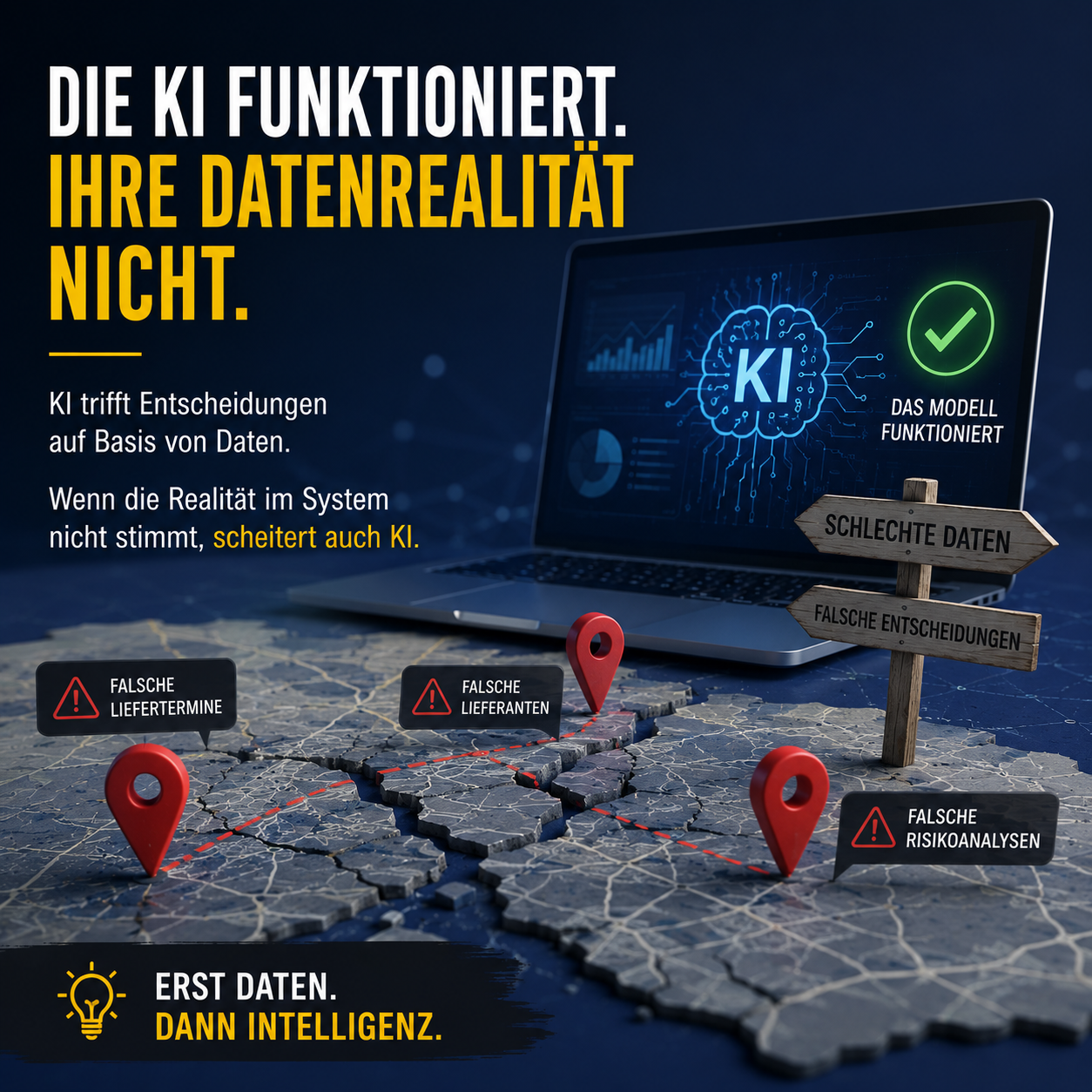
🚀 Teil 2 unserer Serie: KI und Stammdaten Wir denken: Die KI-Modelle funktionieren. Wir müssen feststellen: Die Realität und die Ergebnisse dahinter nicht. Aber warum liefern viele KI-Projekte nicht den erwarteten Mehrwert? Erfahrungsgemäß fließen bis zu 2/3 der KI-Projektzeit in die Datenaufbereitung. Und trotzdem wird genau dieser Punkt oft unterschätzt. Denn KI trifft Entscheidungen auf Basis verarbeitungsfähiger Daten, prüft diese jedoch ohne konkrete Anweisung nicht. Der altbekannte Satz „shit in, shit out“, gilt hier im Besonderen. KI und Stammdaten eine untrennbare Allianz Eine der wichtigsten Dimensionen dabei: 📍 Standort- und Lokationsdaten bzw. Adressdaten. Denn der Standort: ✅ bestimmt das Design der Lieferkette ✅ bestimmt Lieferzeiten und Produktionsfähigkeit ✅ bestimmt die Kosten und ungeplanter Folgekosten ✅ bestimmt mögliche Risiken in der Lieferkette ✅ legt fest, wie eine Risikovorsorge aussieht   📍 Die entscheidenden Fragen sind: 1. Wo befindet sich der Lieferant wirklich? 2. Von welchem Werk wird tatsächlich geliefert?   Wenn diese Informationen nicht sauber sind: ⚡werden ggf. falsche Lieferantenentscheidungen getroffen ⚡entstehen unrealistische Liefertermine ⚡werden Logistiknetzwerke falsch geplant und optimiert ⚡weichen Planungsszenarien und Forecasts ab ⚡entstehen Verzüge und Mehrkosten, die eigene Produktions- und Lieferfähigkeit wird beeinträchtigt ⚡ein automatisiertes, digitales Risikomanagement wird ineffektiv ⚡regulatorische Anforderungen werden unzureichend erfüllt Die Liste der selbstgeschaffenen Risiken ist lang. Und dennoch sehen wir häufig: Unternehmen investieren zuerst in KI-Use-Cases – und erst danach in Datenqualität. Dabei ist die Reihenfolge gerade bei Automatisierungsprojekten und KI-gestützten Netzwerk- und Materialplanungen entscheidend: 1️⃣Erst qualitativ hochwertige, verifizierte Daten. 2️⃣Dann Aufbau und Nutzung der Intelligenz.   👉 Stay tuned. Im nächsten Beitrag zeigen wir, warum fehlende Standort- und Adresstransparenz auch strategische Einkaufsentscheidungen massiv beeinflusst. Interessiert daran, wie man diese Datenqualität mit Unterstützung innovativer und bewährter digitaler Supply Chain Technologie in kurzer Zeit massiv verbessert? Dann dranbleiben.  

Stammdaten im Einkauf

Stammdaten im Einkauf

Stammdaten im Einkauf als Fundament wirksamer Lieferketten oder als Risikofaktor bei Entscheidungen und Geschäftsbetrieb Investieren Sie in KI und digitale Lösungen und Ihre Stammdaten im Einkauf bleiben unangetastet? Diese problematische Herangehensweise sehen wir in vielen Unternehmen. Aber die größten Probleme im Einkauf und in der Supply Chain entstehen nicht im System selbst, sondern durch unvollständige oder chaotische Stammdaten. Das gilt vor allem bei KI-Projekten. Die Folgen mangelhafter Lieferanten- und Lokationsdaten. 🔶fehlgeleitete Lieferungen 🔶Lieferterminverspätungen mit Produktionsauswirkungen 🔶verzerrte Reportings, lückenhafte Transparenz bei Ausgaben und Leistung 🔶unklare und nicht identifizierbare Lieferkettenrisiken (Knotenpunkte, Lieferanten, Rohstoffe) 🤖 Und genau hier wird es kritisch: Mit KI werden diese Fehler nicht reduziert – sie werden in Rekordgeschwindigkeit skaliert. Denn KI trifft Entscheidungen auf Basis Ihrer Daten! Wenn die Realität im System nicht stimmt, optimiert die KI in die falsche Richtung. Was zusätzlich oft unterschätzt wird ist, dass die Stammdaten auch die Grundlage sind für: ➡️LkSG-Analysen ➡️ESG-Reporting ➡️Sanktionsprüfungen ➡️Compliance-Prozesse ⚠️Investieren in Digitalisierung, ohne die Basis zu stabilisieren? Klar, mit mehr Geschwindigkeit in die falsche Richtung! ⚠️Stammdaten sind kein IT-Thema. Sie sind Steuerungsgrundlage und liegen klar im Verantwortungsbereich des Funktionsbereiches! Nirgendwo anders! 👉Folgen Sie mir für Ansätze zur Bereinigung von Stammdaten und freuen Sie sich auf einen pragmatischen, praxiserprobten digitalen Lösungsansatz. Coming soon……

Handelsblatt CPO Summit

2026 Handelsblatt CPO Summit

2026 Handelsblatt CPO Summit Once again, attending the 3rd Handelsblatt CPO Summit was time well spent. 75+ top procurement leaders from multinationals & SMEs came together to exchange and learn. Especially the workshop sessions stood out, with open, honest discussions on real challenges beyond polished slides. And, as expected, AI dominated the discussions. Not a big surprise, but one thing became very clear this time: 👉The conversation around AI has fundamentally shifted from talking about AI as an advisor, a source of data, intelligence, and decision support to AI as an OPERATOR. 👉It’s no longer just about prompting. It’s about agents that execute. And I have talked to plenty of CPOs who have moved from the experimental stage. They OPERATE AI agents as part of their teams. Another indication that AI may not be the future (we often talk about Procurement 2030 or 2035, or something happens in that magic future). It’s here today, and this rapid evolution raises some important questions. In a workshop with Mattea Herzberg (CPO Tesa), we explored some of these questions further under the idea of “AI shoring“ and how AI impacts our organizational design. Additionally, Mattea shared practical insights on Tesa’s impressive AI journey. ❓Do we still need to offshore operational tasks to low-cost countries, or can AI agents take over these activities? ❓How do we design organizations where humans and AI agents work side by side as coworkers? ❓What does accountability look like when decisions are made -or executed- by machines? ❓How do we build trust in this hybrid setup? ❓The governance challenge: Do we need guardrails to prevent uncontrolled behavior and ensure alignment without avoiding overregulation that stifles innovation? We had an intense exchange about adoption, leadership, and accountability, and it became clear: This isn’t just a cost or technology discussion! ☝️It’s about courage and adoption, rethinking operating models, speed, control, and value creation. AI is no longer just enhancing how we work. It’s already reshaping our organizational design, (shared) roles & responsibilities, development plans (humans and agents), and who or what does the work. Thanks to the entire Handelsblatt team for another excellent event and to all participants. It was great seeing many of you again.

Speaker Alert: 3rd Supply Chain Risk & Resilience Forum

Supply Chain Risk & Resilience Forum

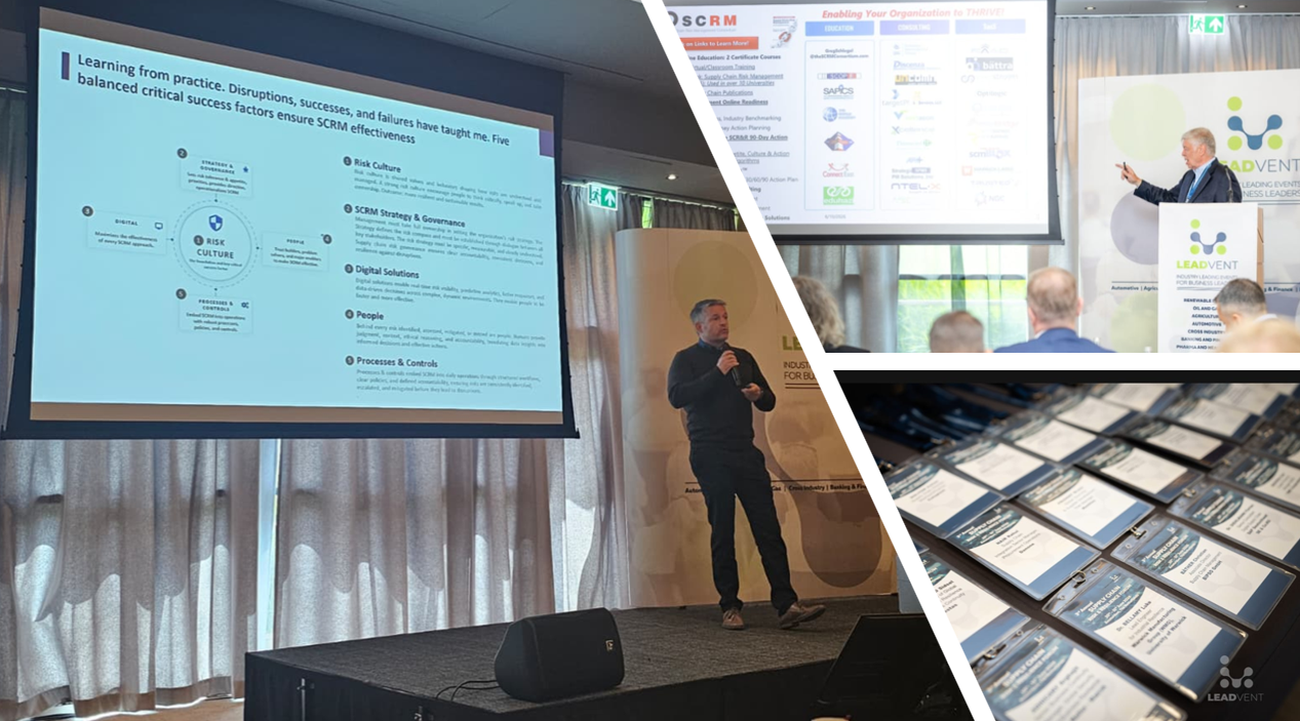
Speaker at the 3rd Annual Supply Chain Risk & Resilience Forum! 📅 Date: 10th – 11th June, 2026, Amsterdam. The 3rd Annual Supply Chain Risk & Resilience Forum brings together global supply chain leaders, risk managers, policymakers, and innovators to address the challenges and opportunities shaping resilient, agile, and future-proof supply chains. Be part of the conversation shaping the future of resilient and sustainable supply chains and join thought and business leaders (Vestas, SAP, A.P. Moeller Maersk, Marsh, The SCRM Consortium, targetP evolving procurement, and many more) to discuss opportunities and strategies and get practical advice. 2025 was a blast, and I am happy to meet again a truly international and diverse team of Supply Chain Risk practitioners and to share some insights from 15+ SCRM implementation projects: ✅Risk Leadership, Risk Culture and Trust: Long-neglected critical success factors ✅How can digital, AI-driven value levers help proactively manage risks and optimize costs ✅The Predictive Advantage: Combining digital intelligence and human insights 📍 Save the date and join us in Amsterdam, 10th – 11th June 2026, 📍 Venue: Steigenberger Airport Hotel Amsterdam, Amsterdam, Netherlands.

Risiko Rohstoffversorgung: Rohstoffe als Waffe

Risiko Rohstoffversorgung: Rohstoffe als Waffe

Risikomeldung – Mangelware 𝗦𝗰𝗵𝘄𝗲𝗳𝗲𝗹𝘀ä𝘂𝗿𝗲🚨 Im Grundrauschen Russland – Ukraine – Trump – Iran – Israel und weiterer Vorfälle und Absurditäten gehen wie gewöhnlich vermeintliche „Kleinigkeiten“ unter, die sich bei genauerer Betrachtung jedoch als systemrelevant und mit enormen Auswirkungen herausstellen. Während wir aktuell Machtpolitik sehen, die mit Waffengewalt Interessen vertritt, zeigt China abermals, wie nicht militärische Konfrontation entscheidet, sondern die Kontrolle über Lieferketten. China nutzt seit Jahren genau dieses Prinzip: dominante Positionen als geopolitischen Hebel ohne einen Schuss abzugeben. Seltene Erden, Rohstoffe, etc.. Peking muss keinen Krieg erklären, es reicht, einen Hahn zuzudrehen. Am 10. April 2026 kündigte China an, seine Exporte ab Mai 2026 auszusetzen. Eine der weltweit am häufigsten genutzten Industriechemikalien. 💣 𝗢𝗵𝗻𝗲 Schwefelsäure: ❌ keine Düngemittel – weniger Nahrung ❌ keine Kupfergewinnung – keine Netze, keine Energiewende ❌ keine Batterien – keine Elektrofahrzeuge ❌ keine Raffination – kein Treibstoff ❌ keine Textilien Und genau hier zeigt sich die Verkürzung vieler Debatten: Der Gegensatz „weg von fossilen, hin zu erneuerbaren“ greift zu kurz. Denn auch erneuerbare Technologien bauen auf genau diesen Systemen auf: auf Rohstoffen, Chemie und globalen Lieferketten. Wer sein Energiesystem darauf aufbaut, muss diese Abhängigkeiten strategisch mitdenken. Und wer Energie, Chemie und Rohstoffe nicht versteht, versteht die Dynamik dieser Krise nicht. Das ist die Logik eines asymmetrischen Wirtschaftskriegs: die eigene dominante Position in globalen Lieferketten als Druckhebel zu nutzen ohne direkte militärische Konfrontation. Welche Rolle spielen Deutschland und Europa in diesem Spiel? Quelle Inhalt und Grafik: Vielen Dank an die Präsidentin und Initiatorin der IZW Initiative Zukunft Wirtschaft Deutschland e.V. für den Input zu diesem Post, (Inhaltlich übernommen und eingeordnet basierend auf einem Beitrag von @cginisty (X, übersetzt) ) targetP evolving procurement unterstützt beim Aufbau eines ganzheitlichen Risikomanagements. 2 renommierte Auszeichnungen, zahlreiche Fachartikel und mittlerweile 15 Kunden aus Konzern und Mittelstand sprechen für sich.

🤖 AI Purchase Order Confirmation

AI PO Confirmation

AI Purchase Order Confirmation: Report and Recommendation We invest millions in ERPs, but run our supply chains on Outlook and Excel. EDI handles our strategic partners. Portals suffer from low adoption. As a result, the messy reality of Purchase Order confirmations, date changes, and exceptions defaults right back to email. Despite having best-of-breed software systems (ERP, MRP, planning tools), most manufacturers hit the same wall when it comes to the messy reality of communicating and collaborating with suppliers. A new report from Glacis puts a hard number on what this actually costs us. 👉Their data shows buyers spend 60-70% of their time just managing confirmations. For a $1.5B manufacturer, that translates to 30 FTEs and millions tied up in safety stock and expedites just to manage the delay. 👉Read the report here (safe link): https://docsend.com/v/6snj8/a_ja ✅ I had the chance to review the Glacies solution. They frame it perfectly: AI as the „Anti-Portal.“ Instead of begging suppliers to log into yet another system, their AI agent works with the existing tools: a company’s inbox. It extracts data from emails and attachments, validates it, and updates the ERP in real time. The brilliance is that it requires zero change from the supplier. Portals failed because they demanded adoption. I highly recommend reading the report if you are a procurement leader looking to drive real operational efficiency. Thanks and Kudos to Philipp Gutheim and the Glacis team.

HANDELSBLATT CPO-SUMMIT 2026

Handelsblatt CPO-Summit 2026

ℹ️HANDELSBLATT CPO-SUMMIT 2026ℹ️ Der etablierte, von Einkaufsleitern und auch mir sehr geschätzte 3. Handelsblatt CPO-Summit für Einkaufs- und Procurement-Führungskräfte findet statt am: 📅 27.4 und 28.4.2026 in Düsseldorf Vom DAX-Konzern zum Mittelstand schauen wir branchenübergreifend auf die Themen, die den Einkauf bewegen. Sachlich, konstruktiv und kritisch. Insbesondere in Zeiten geopolitischer Umbrüche stehen Einkauf und CPO im Zentrum und müssen mehr denn je als strategischer Zukunftsgestalter agieren. Inhalte ✅Wie können Einkaufsstrategien widerstandsfähig und zukunftsorientiert gestaltet werden? ✅Wie wird AI zum Gamechanger für Einkaufsorganisationen? ✅Brücken bauen: Einkauf im Schulterschluss mit Vertrieb, Produktion, Entwicklung und Finance ✅Welche Rolle spielt der CPO als Treiber für Innovation und Transformation? ✅Wie gelingt der Spagat zwischen Nachhaltigkeit und Wirtschaftlichkeit? Das erwartet Sie ✔️Treffen Sie die Einkaufsentscheiderinnen und -entscheider großer und mittelständischer Unternehmen aller Branche in einem exklusiven Rahmen. ✔️ Internationale Einblicke durch Live-Schaltungen zu Handelsblatt-Korrespondentinnen und -Korrespondenten. ✔️Austausch auf Augenhöhe – tauschen Sie sich in vertraulichem Rahmen aus. ✔️ Erleben Sie mit vielen Best Practices, Powertalks, Panel-Diskussionen, Impuls-Vorträgen und unterschiedlichen Networking-Möglichkeiten Interessiert? Anmeldungen noch möglich! Über mich können Sie vergünstigt teilnehmen und 15% sparen. Einfach bei der Anmeldung den Vorteilscode 77D2502057 eingeben. https://live.handelsblatt.com/event/handelsblatt-cpo-summit/?utm_medium=ko&utm_source=77&utm_campaign=P1201199

en_USEnglish
About the company:
Joint Venture Truck OEMs
(Germany & Sweden)
Development Hydrogen fuel cell systems
approx. 500Employees, strong growth
GlobalTechnologyInnovator

Case Study

Industry: Automotive

Area: Organisation

Land: Deutschland & USA

Duration: 12 Months

Starting Point / Assignment

  • approx. EUR 400 million Procurement spend p.a. (rapidly increasing)
  • Independent joint venture between two large truck manufacturers
  • Start of series production in 2027 and development of the North American market with local production requires far-reaching development and expansion of Procurement, particularly regarding a global organization (skills, capacities, x-functional collaboration) and digitalization

Objectives

  • Creating transparency about the maturity level of the Procurement function
  • Prioritized action plan to gradually increase the maturity level regarding competencies, x-functional cooperation, productivity/efficiency, digitalization, etc.
  • Development of target organization model (2023, 2027, 2030) for production and non-production materials Procurement incl. all role descriptions and necessary capacity (FTE sizing)
  • Detailed transformation plan for the global Procurement organization aligned with the milestones "Start of series production" and "Market entry & local production North America“
  • Review of Procurement’s digital strategy and projects including future recommendations

Approach

  • Comprehensive maturity analysis of Procurement (targetP! method) with a focus on organization and digitalization based on personal interviews (all Procurement staff and top stakeholders) as well as in-depth document and data analysis (strategies, guidelines, process descriptions, digitalization initiatives, standards for category & supplier management, order & invoice volumes, etc.).
  • S/T/O analysis to determine the actual capacity utilization of all Procurement employees as part of individual interviews
  • Workshops/interviews with IT & Procurement on the Procurement system landscape and digital strategy

Results / „Deliverables“

  • Detailed maturity assessment report on Procurement (production and non-production materials) including prioritized actions and quick wins
  • Procurement digital strategy benchmark against best practices with specific recommendations for actions, risk analysis, and quick wins
  • Transparency regarding the actual use of capacity in Procurement, gap analysis of the respective profiles and stakeholder expectations
  • Role-based target Procurement organization with a step-by-step development plan (staffing, development, reallocation)
  • Tailor-made role descriptions for use in subsequent recruiting measures
About the company:
Joint Venture Truck OEMs
(Germany & Sweden)
Development Hydrogen fuel cell systems
approx. 500Employees, strong growth
GlobalTechnologyInnovator

Case Study

Industry: Automotive

Area: Organisation

Land: Deutschland & USA

Duration: 12 Months

Starting Point / Assignment

  • approx. EUR 400 million Procurement spend p.a. (rapidly increasing)
  • Independent joint venture between two large truck manufacturers
  • Start of series production in 2027 and development of the North American market with local production requires far-reaching development and expansion of Procurement, particularly regarding a global organization (skills, capacities, x-functional collaboration) and digitalization

Objectives

  • Creating transparency about the maturity level of the Procurement function
  • Prioritized action plan to gradually increase the maturity level regarding competencies, x-functional cooperation, productivity/efficiency, digitalization, etc.
  • Development of target organization model (2023, 2027, 2030) for production and non-production materials Procurement incl. all role descriptions and necessary capacity (FTE sizing)
  • Detailed transformation plan for the global Procurement organization aligned with the milestones "Start of series production" and "Market entry & local production North America“
  • Review of Procurement’s digital strategy and projects including future recommendations

Approach

  • Comprehensive maturity analysis of Procurement (targetP! method) with a focus on organization and digitalization based on personal interviews (all Procurement staff and top stakeholders) as well as in-depth document and data analysis (strategies, guidelines, process descriptions, digitalization initiatives, standards for category & supplier management, order & invoice volumes, etc.).
  • S/T/O analysis to determine the actual capacity utilization of all Procurement employees as part of individual interviews
  • Workshops/interviews with IT & Procurement on the Procurement system landscape and digital strategy

Results / „Deliverables“

  • Detailed maturity assessment report on Procurement (production and non-production materials) including prioritized actions and quick wins
  • Procurement digital strategy benchmark against best practices with specific recommendations for actions, risk analysis, and quick wins
  • Transparency regarding the actual use of capacity in Procurement, gap analysis of the respective profiles and stakeholder expectations
  • Role-based target Procurement organization with a step-by-step development plan (staffing, development, reallocation)
  • Tailor-made role descriptions for use in subsequent recruiting measures
About the company:
Family Owned Business with international Footprint
approx. 500 Mio.Turnover
approx. 3.000 Employees
Technology & Market Leaderin Harvesting Equipment

Case Study

Industry: Agricultural Machines

Area: Transformation

Country: Germany

Duration: ~ 18 Months

Starting Point / Assignment

  • approx. 200 million Procurement volume
  • Sole focus on operational processes (clerical function)
  • Strong focus on German plants, not prepared for internationalization and cooperation, despite of having operating units in the USA and China
  • Strong growth in turnover and increased internationalization
  • Procurement’s priority: Supply security (“keep the plants running”)
  • Digitalization not actively driven

Objectives

  • Create an understanding of Procurement’s maturity level
  • Identify potential (e.g., value contribution, efficiency, compliance), through more professional category & supplier management and digital support
  • Elaborate on alternative measures to develop Procurement and create an action plan, particularly concerning process improvements
  • If necessary, determine and argue capacity requirements
  • Optimize structures to prepare for growth and improved resource utilization

Approach

  • Comprehensive maturity analysis of Procurement (targetP! method) with a focus on organization and operational improvements (personal interviews with Procurement staff and top stakeholders) as well as in-depth document and data analysis (strategies, guidelines, process descriptions, digitalization initiatives, etc.)
  • Development of a holistic transformation plan and target organization model including roles and responsibilities, stakeholder integration, etc.
  • Early involvement of employees "future conferences to build my organization“
  • Joint creation of a practicable category structure, a Procurement Vision & Strategy


Results / „Deliverables“

  • First-time definition of a Procurement strategy with aligned objectives
  • Capacity optimization through targeted personnel expansion
  • Optimized organizational model and a more rigid category structure established
  • First system reviews with digital solution providers based on a digital action plan and precise requirements
  • Design of a customized multi-year training program for all roles
  • Implementation of Category Management training with pilots
  • Development and implementation of Procurement processes
About the company:
Family Owned Business with international Footprint
approx. 500 Mio.Turnover
approx. 3.000 Employees
Technology & Market Leaderin Harvesting Equipment

Case Study

Industry: Agricultural Machines

Area: Transformation

Country: Germany

Duration: ~ 18 Months

Starting Point / Assignment

  • approx. 200 million Procurement volume
  • Sole focus on operational processes (clerical function)
  • Strong focus on German plants, not prepared for internationalization and cooperation, despite of having operating units in the USA and China
  • Strong growth in turnover and increased internationalization
  • Procurement’s priority: Supply security (“keep the plants running”)
  • Digitalization not actively driven

Objectives

  • Create an understanding of Procurement’s maturity level
  • Identify potential (e.g., value contribution, efficiency, compliance), through more professional category & supplier management and digital support
  • Elaborate on alternative measures to develop Procurement and create an action plan, particularly concerning process improvements
  • If necessary, determine and argue capacity requirements
  • Optimize structures to prepare for growth and improved resource utilization

Approach

  • Comprehensive maturity analysis of Procurement (targetP! method) with a focus on organization and operational improvements (personal interviews with Procurement staff and top stakeholders) as well as in-depth document and data analysis (strategies, guidelines, process descriptions, digitalization initiatives, etc.)
  • Development of a holistic transformation plan and target organization model including roles and responsibilities, stakeholder integration, etc.
  • Early involvement of employees "future conferences to build my organization“
  • Joint creation of a practicable category structure, a Procurement Vision & Strategy


Results / „Deliverables“

  • First-time definition of a Procurement strategy with aligned objectives
  • Capacity optimization through targeted personnel expansion
  • Optimized organizational model and a more rigid category structure established
  • First system reviews with digital solution providers based on a digital action plan and precise requirements
  • Design of a customized multi-year training program for all roles
  • Implementation of Category Management training with pilots
  • Development and implementation of Procurement processes
About the company:
Leading Healthcare Provider
High reputation (Top rated Medical Care)
Site: approx. 825 Mio. Turnover
approx. 1.700employees
> 80.000 Patienten/Jahr

Case Study

Industry: Health Care/Clinic

Bereich: Interim & Entwicklung

Country: Germany

Duration: 6 Months

Starting Point / Assignment

  • approx. EUR 60 million spend p.a., complex spend structure
  • Procurement with a strong focus on processing and operational processes, no systematic spending management
  • Significant operational problems in day-to-day business led to high costs
  • Very insecure, demotivated team due to degrading treatment and extreme micromanagement by the previous Procurement Manager
  • Non-existent digitalization of core processes and tasks
  • Extensive, sometimes paralyzing bureaucracy in general and when approving requirements such as Requisitions, Purchase Orders and Contracts
  • Lack of discipline and ethics among sales reps (back-door selling, etc.)
  • Low reputation within the hospital, especially among chief physicians

Objectives

  • Main objective: Stabilization and reactivation of a highly frustrated team
  • Stabilization of day-to-day business, also due to above-average absences
  • Better distribution of the workload among the team members
  • Creating an understanding of the actual maturity level of Procurement, identifying potential (e.g., value contribution, efficiency, compliance)
  • Elaborating alternative measures to develop Procurement, and create an action plan, particularly concerning process simplifications (approvals of Requisitions, Purchase Orders, Contracts)
  • Improving customer service quality and interaction with internal customers

Approach

  • Comprehensive maturity analysis of Procurement involving stakeholders
  • Creation and coordination of a holistic development plan
  • Open door policy and individual meetings several times a week
  • Regular visits to the hospital wards to understand the needs and build trust
  • Frequent exchange with internal customers (regular personal exchange, participatory approach: Involvement of all employees, e.g. we
  • Weekly team meetings to discuss issues, improvement ideas, and solutions to ensure full commitment and involvement in improvement projects
  • Strong involvement in day-to-day business (negotiations, sourcing)
  • Process analyses, in particular, SAP optimization options & approvals

Results / „Deliverables“

  • Team stabilized, motivation increased, absences and absenteeism reduced (CEO quote: "You calmed people down very quickly with professional empathy and got them behind you")
  • First-time definition of a Procurement strategy with agreed upon targets
  • Regular coordination with internal customers (Chief physician quote: "we talk to each other now, things run faster, we finally feel well looked after")
  • Approval and implementation of moderate staff expansion with restructuring of work areas and balancing of workload
  • Redesign of framework agreements with improved commercial conditions
  • Complete processing of unfinished order processes (backlog)
  • Simplification and definition of core Procurement processes;
  • Addition of new SAP functionalities to drive automation & workload reduction
About the company:
Leading Healthcare Provider
High reputation (Top rated Medical Care)
Site: approx. 825 Mio. Turnover
approx. 1.700employees
> 80.000 Patienten/Jahr

Case Study

Industry: Health Care/Clinic

Bereich: Interim & Entwicklung

Country: Germany

Duration: 6 Months

Starting Point / Assignment

  • approx. EUR 60 million spend p.a., complex spend structure
  • Procurement with a strong focus on processing and operational processes, no systematic spending management
  • Significant operational problems in day-to-day business led to high costs
  • Very insecure, demotivated team due to degrading treatment and extreme micromanagement by the previous Procurement Manager
  • Non-existent digitalization of core processes and tasks
  • Extensive, sometimes paralyzing bureaucracy in general and when approving requirements such as Requisitions, Purchase Orders and Contracts
  • Lack of discipline and ethics among sales reps (back-door selling, etc.)
  • Low reputation within the hospital, especially among chief physicians

Objectives

  • Main objective: Stabilization and reactivation of a highly frustrated team
  • Stabilization of day-to-day business, also due to above-average absences
  • Better distribution of the workload among the team members
  • Creating an understanding of the actual maturity level of Procurement, identifying potential (e.g., value contribution, efficiency, compliance)
  • Elaborating alternative measures to develop Procurement, and create an action plan, particularly concerning process simplifications (approvals of Requisitions, Purchase Orders, Contracts)
  • Improving customer service quality and interaction with internal customers

Approach

  • Comprehensive maturity analysis of Procurement involving stakeholders
  • Creation and coordination of a holistic development plan
  • Open door policy and individual meetings several times a week
  • Regular visits to the hospital wards to understand the needs and build trust
  • Frequent exchange with internal customers (regular personal exchange, participatory approach: Involvement of all employees, e.g. we
  • Weekly team meetings to discuss issues, improvement ideas, and solutions to ensure full commitment and involvement in improvement projects
  • Strong involvement in day-to-day business (negotiations, sourcing)
  • Process analyses, in particular, SAP optimization options & approvals

Results / „Deliverables“

  • Team stabilized, motivation increased, absences and absenteeism reduced (CEO quote: "You calmed people down very quickly with professional empathy and got them behind you")
  • First-time definition of a Procurement strategy with agreed upon targets
  • Regular coordination with internal customers (Chief physician quote: "we talk to each other now, things run faster, we finally feel well looked after")
  • Approval and implementation of moderate staff expansion with restructuring of work areas and balancing of workload
  • Redesign of framework agreements with improved commercial conditions
  • Complete processing of unfinished order processes (backlog)
  • Simplification and definition of core Procurement processes;
  • Addition of new SAP functionalities to drive automation & workload reduction
About the company:
Highly renowned Qatari company
approx. 825 mn.Turnover
approx. 3.500 Employees
Regional Market Leader
Shipping, Maritime Logistik & Services

Case Study

Industrie: Reederei & Maritim

Bereich: Organisation & Interim

Country: Qatar

Duration: ~ 12 Months

Starting Point / Assignment

  • approx. EUR 300 million Procurement spend p.a.
  • Procurement with a strong focus on processing and operational processes, no systematic spending management
  • Significant operational problems in day-to-day business led to high costs for troubleshooting, escalations, and internal conflicts with stakeholders
  • Low acceptance and appreciation of Procurement and high political pressure despite excellent company results
  • Long-term vacancy in Procurement leadership impacts performance, customer satisfaction, and insecurity and leading to high fluctuation on buyer level
  • Digitalization of core processes and tasks only marginally developed

Objectives

  • Create an understanding of the true maturity level of Procurement and gain buy-in from the Executive Board
  • Identify potential (e.g., value contribution, efficiency, compliance), through more professional category & supplier management and automation
  • Elaborate on alternative measures to develop Procurement and create an action plan, particularly concerning process simplifications
  • Improve strategic and operational reporting for the CFO
  • Implement organizational and structural optimization to improve service quality
  • After two months: additional Role as VP Ad Interim due to the dismissal of the Head of Procurement

Approach

  • Comprehensive maturity analysis of Procurement involving stakeholders
  • Creation and coordination of a holistic transformation plan with staff adjustments, digitalization, and skills requirements
  • Development of a target organization model (category management) with role descriptions, responsibilities and recruiting support
  • Highly participative approach with intensive involvement of all employees, e.g., as part of "future conferences" (for the first time in the company) and expert teams with topic champions
  • Further development of Procurement and sourcing governance, e.g., tailored Category Structure, Procurement Vision & Procurement strategy and policies

Results / „Deliverables“

  • First-time definition of a Procurement strategy with aligned objectives
  • Approval and implementation of moderate staff expansion and allocation and expansion of required skills through comprehensive training plans
  • Start of digitalization projects based on a digital action plan (Supplier Portal)
  • Implementation of a Category Management approach and process and execution of 10 category pilots to identify additional value contribution
  • Development and implementation of comprehensive Supplier Management involving a newly designed supplier qualification process (Supplier Portal)
  • Implementation of a Procurement guideline & process manual and creation of comprehensive Procurement reporting with PowerBI
  • 10-month Interim Management and stabilization of the organization
About the company:
Highly renowned Qatari company
approx. 825 mn.Turnover
approx. 3.500 Employees
Regional Market Leader
Shipping, Maritime Logistik & Services

Case Study

Industrie: Reederei & Maritim

Bereich: Organisation & Interim

Country: Qatar

Duration: ~ 12 Months

Starting Point / Assignment

  • approx. EUR 300 million Procurement spend p.a.
  • Procurement with a strong focus on processing and operational processes, no systematic spending management
  • Significant operational problems in day-to-day business led to high costs for troubleshooting, escalations, and internal conflicts with stakeholders
  • Low acceptance and appreciation of Procurement and high political pressure despite excellent company results
  • Long-term vacancy in Procurement leadership impacts performance, customer satisfaction, and insecurity and leading to high fluctuation on buyer level
  • Digitalization of core processes and tasks only marginally developed

Objectives

  • Create an understanding of the true maturity level of Procurement and gain buy-in from the Executive Board
  • Identify potential (e.g., value contribution, efficiency, compliance), through more professional category & supplier management and automation
  • Elaborate on alternative measures to develop Procurement and create an action plan, particularly concerning process simplifications
  • Improve strategic and operational reporting for the CFO
  • Implement organizational and structural optimization to improve service quality
  • After two months: additional Role as VP Ad Interim due to the dismissal of the Head of Procurement

Approach

  • Comprehensive maturity analysis of Procurement involving stakeholders
  • Creation and coordination of a holistic transformation plan with staff adjustments, digitalization, and skills requirements
  • Development of a target organization model (category management) with role descriptions, responsibilities and recruiting support
  • Highly participative approach with intensive involvement of all employees, e.g., as part of "future conferences" (for the first time in the company) and expert teams with topic champions
  • Further development of Procurement and sourcing governance, e.g., tailored Category Structure, Procurement Vision & Procurement strategy and policies

Results / „Deliverables“

  • First-time definition of a Procurement strategy with aligned objectives
  • Approval and implementation of moderate staff expansion and allocation and expansion of required skills through comprehensive training plans
  • Start of digitalization projects based on a digital action plan (Supplier Portal)
  • Implementation of a Category Management approach and process and execution of 10 category pilots to identify additional value contribution
  • Development and implementation of comprehensive Supplier Management involving a newly designed supplier qualification process (Supplier Portal)
  • Implementation of a Procurement guideline & process manual and creation of comprehensive Procurement reporting with PowerBI
  • 10-month Interim Management and stabilization of the organization